
If you are buying or already own a home in a Las Vegas HOA community, one of the most important costs to understand is your HOA assessment.
HOA fees help pay for the services, maintenance, amenities, and administration required to operate a community. The amount can vary significantly depending on the type of property, size of the community, amenities, and services provided.
Understanding what your HOA fees cover can help you plan your household budget and make better decisions when buying a home.
What Are HOA Fees?
HOA fees are regular assessments paid by homeowners within a homeowners association.
The association uses these funds to cover expenses related to managing and maintaining the community. Depending on the association, fees may be collected monthly, quarterly, or annually.
The amount is determined by the association’s budget and the services required to operate the community.
There is no standard HOA fee across Las Vegas. Two communities located only a short distance apart can have very different assessment amounts because their services, amenities, property types, and operating costs may differ.
What Do HOA Fees Typically Cover?
Every HOA is different, but assessments may contribute towards several areas of community management.
Common Area Maintenance
HOA fees may help maintain shared areas such as entrances, landscaping, sidewalks, recreational spaces, and other common property.
In Las Vegas, landscaping and irrigation can require regular attention because of the hot and dry climate.
Community Amenities
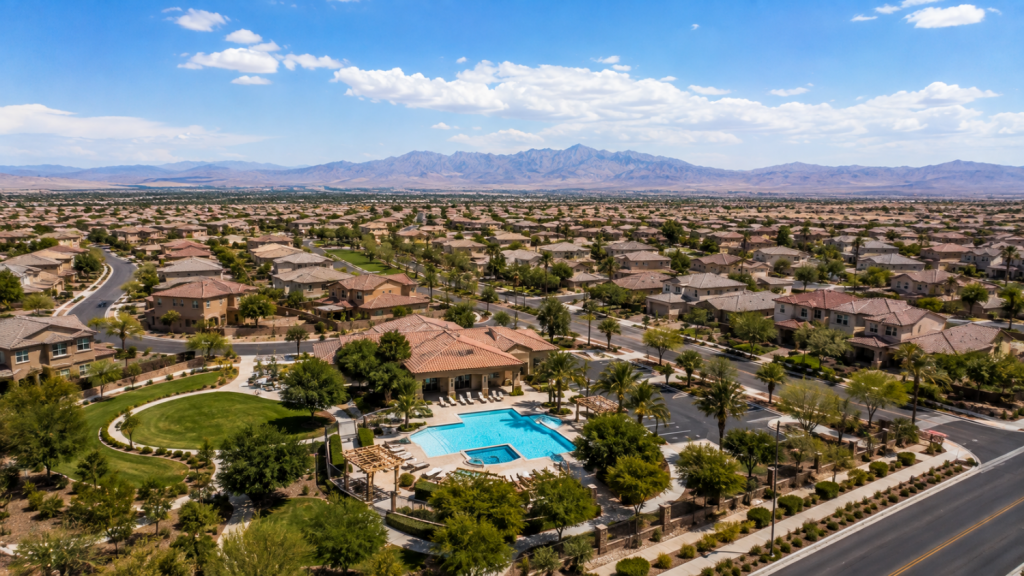
Communities with amenities such as swimming pools, clubhouses, fitness centres, parks, or recreational facilities may use HOA funds to maintain these shared spaces.
The more extensive the amenities, the greater the maintenance and operating costs may be.
Landscaping
Many HOA communities maintain landscaping in shared areas throughout the neighbourhood.
This can include lawn care, trees, plants, irrigation systems, trimming, seasonal maintenance, and repairs.
Repairs and Maintenance
HOA assessments may contribute towards routine repairs and maintenance of community property.
Depending on the community, this could include gates, lighting, roofing, irrigation, fencing, streets, recreational facilities, and other shared infrastructure.
Administrative Expenses
Running an HOA involves administrative work.
Fees may help cover accounting, record keeping, homeowner communication, insurance, management services, meetings, and other operational expenses.
Why Do HOA Fees Vary So Much?
There is no single fee that applies to every Las Vegas HOA.
Several factors can affect the amount homeowners pay.
Community Size
Larger communities may have more properties, common areas, infrastructure, and services to maintain.
Amenities
A community with multiple pools, clubhouses, parks, fitness facilities, or other amenities generally has more ongoing maintenance expenses.
Property Type
Condominiums, townhomes, and single family home communities can have different maintenance responsibilities and operating costs.
Level of Management
Some associations manage certain responsibilities internally, while others hire professional HOA management companies to handle administration, maintenance coordination, financial management, homeowner communication, and other services.
Reserve Funding
HOAs need to plan for major future expenses as well as everyday operating costs. A portion of assessments may be allocated towards reserves for significant repairs or replacements.
Can HOA Fees Increase?
Yes. HOA assessments can increase when the association’s expenses change or when additional funding is needed.
For example, costs may increase because of higher vendor rates, insurance premiums, maintenance expenses, utilities, or major community projects.
Before buying a home in an HOA community, buyers should look at the association’s financial information and ask whether assessments have changed in recent years.
Understanding the history of fee increases can provide useful context when planning future housing costs.
What Is a Special Assessment?
A special assessment is an additional charge that an HOA may impose to cover a significant expense that is not fully covered by the regular budget or reserve funds.
A special assessment could potentially be used for major repairs, unexpected damage, infrastructure work, or other substantial community expenses.
The rules surrounding special assessments vary by association, so homeowners should review their governing documents and association information to understand how these charges work.
What Should Buyers Ask About HOA Fees?
If you are considering buying a home in a Las Vegas HOA community, do not look at the monthly fee alone.
Ask:
- How much are the current HOA assessments?
- What services are included?
- Are there additional fees for amenities?
- Have assessments increased recently?
- Are any special assessments currently planned?
- What major projects are expected?
- How are reserve funds being managed?
- What maintenance is the homeowner responsible for?
These questions can help you understand the actual cost of living in the community.
Are Higher HOA Fees Always a Bad Thing?
Not necessarily.
A higher HOA assessment may reflect a community with extensive amenities, significant common areas, professional management, or higher levels of maintenance.
Likewise, a low HOA fee does not automatically mean a community is financially healthier or better managed.
When comparing properties, consider what you receive for the fee and how effectively the association manages its responsibilities.
Understanding the Value of Your HOA Fees
HOA fees are an ongoing part of homeownership for many Las Vegas residents. While no homeowner wants to pay more than necessary, the purpose of an HOA assessment is to fund the services and responsibilities required to maintain the community.
A well managed association should have a clear budget, organised financial records, appropriate reserve planning, and a practical approach to maintaining community assets.
Understanding how your HOA fees are collected and spent can help you become a more informed homeowner and make better decisions when purchasing property.